Showing posts with label Analysis. Show all posts

Thursday, February 11, 2010

Literary Analysis


In Columbus Was a Dope by Robert Heinlein, scientific progress is described as an inevitability. It is human nature to desire progress and, over time, accept change caused by attempts to progress. Humans, as a species, are not content with the status quo. People are hungry for improvement and believe that everything can always be better. Heinlein demonstrates this through a conversation between acquaintances in a futuristic setting discussing the motivation of exploration.

It begins with a few men in a bar talking about an eminent voyage to Proxima Centauri. One of them, Dr. Appleby, is to be aboard the ship bound for the distant star. Mr. Barnes, one of the other men, is arguing with Dr. Appleby, writing off the adventure as a waste of time. When Barnes asks Dr. Appleby why he is taking the trip, inquiring what motivation he had for putting his life and the lives of his wife and daughter at risk, the Appleby responds, "It can't be explained... What took Peary to the North Pole? Why did Columbus get the Queen to hock her jewels? Nobody has ever been to Proxima Centauri — so we're going." In other words, he was going for the sake of progress. He was pushing his limits and the limits of human kind for the sake of advancement that he could not yet understand. Despite its mystery, Dr. Appleby felt this progress was still inexplicably important. Though he could see no gain from the expedition, he knew that it was so valuable that he was willing to give the rest of his life up to the journey, as it would take over sixty years. He knew that his children would be the ones to see the trip finished, and his grand children would be the ones to finally return, and he was willing to make this decision for all of them because he felt the allure of a new, exciting future so strongly.

Though Barnes couldn’t understand Dr. Appleby’s value in exploration for the sake of unknown progress, the kicker to this story is that the very place he was speaking was the result of people taking value such risks. Indeed, the bar that they were lightly conversing in was located on the moon, yet Barnes couldn't see the irony in his statements. This further demonstrates humanity's tendency to embrace change. Even though it was in Barnes's character to be satisfied with the status quo, the status quo that he accepts is the result of thousands of years of sometimes violent and dangerous progress that he has no trouble justifying.

Thus, humanity is in constant, purposeful motion towards a different future, and, upon the arrival of something new, humanity is quick to accept the change and continue moving forward. Scientific progress is in human nature.

Current Events Analysis


Space exploration, while vastly popular in the 1960s, has begun to lose such strong support. There are questions of its value as well as questions regarding the way in which it is being operated. On top of this, President Obama has recently suggested a change in direction for America’s space exploration which will massively alter the way in which NASA functions.

A few years ago, NASA released a document describing the goals of space exploration.
The document took the position that space exploration is vital to America’s future. Its argues that exploring the cosmos inspires children to become new generations of scientist, creates a potential for technological breakthroughs that could benefit the economy as well as national security, and promotes democracy as a government system capable of achieving great things. In addition to this, the article states that "because the very purpose of exploratory voyages and research is to understand the unknown, exact benefits defy calculation." This shows that beyond the potential of inspiring prospective scientist, beyond the possibility of developing technologies that could be useful for private industry and national security, and beyond evoking national pride, NASA believes space exploration has great, unknown benefits that will only be discovered if America continues to reach for the stars. The fact that space holds so many mysteries is part of what draws the human mind to ponder about it and part of what allows space exploration to be so easily justifiable. Even opponents to NASA cannot refute the possibility of such grand, unrevealed rewards. (National Aeronautics and Space Administration)

There are, however, opponents to NASA who desire not the end of space exploration, but the relocation of it. Those of this opinion believe that the heavens should be studied by private businesses and organizations streamlined by competition. One notable person of this opinion is Steve Bonta, the Director of Indianapolis operations of the Defense Finance and Accounting Service, the largest government finance and accounting operation in America. Not only does he believe that private enterprise could carry out space exploration more efficiently, he feels that government should not have financed this project to begin with. He wrote in the San Diego Greenhaven Press, “the federal government is not constitutionally authorized to use taxpayer dollars to promote science for its own sake.” In other words, as space exploration doesn’t directly affect national security, the government has no business spending inordinate amounts of tax payers’ money on it. This view neglects the indirect benefits of space exploration as described in the previous paragraph as well as the possibility of rewards beyond current comprehension. At the same time, this argument makes a good point. The benefits are not direct or definite, so it is hard to justify their cost. Only in by being truly profitable, as it would have to be in the private sector, can space exploration be absolutely defensible. (Bonta)

Recently, there has been a proposed hybrid of these ideas. Last week, President Obama presented a plan in which private enterprise would provide the ships for near Earth space exploration. The goal is that eventually NASA will simply be able to buy tickets to the moon, orbit, or to the international space station from privately run businesses. Their Ships have not been built yet, so there will be a period of time where NASA will rely on Russia to ferry Astronauts to and from space. While private enterprise would take over manned near space flight, NASA would be free to devote all of its efforts to developing new technologies that will hopefully bring human kind further into the reaches of space. The plan would now, instead of focusing on another landing on the moon, devote its efforts to developing new launch and space travel technologies; there is no written goal of sending man or machine to other planets. Florida Democrat Representative Suzanne M. Kosmas complained that the plan had a "lack of direction," but this may be more of a positive attribute than negative. Without set goals, the NASA is free to determine the most beneficial goals to set and natural phenomenon to study. This plan also demonstrates understanding that the benefits of space exploration have yet to be fully revealed and that such rewards may not necessarily be found in the romantic adventures of manned missions to the moon and beyond. (Chang)

The space exploration of today is indeed very different than that of the Space Race. Questions are being raised about the necessity of government involvement in this extravagant field of science, and changes are being made to spread its development beyond the bounds of government control. Space exploration has taken a new direction and has an uncertain future due to both the changes being made and its unknown value to society. With some calling Obama’s plan for NASA the death of space exploration and others claiming it will lead to the revitalization of the field, these are very unsettling times for believers of its value.

Wednesday, February 10, 2010

Background Analysis

America’s international competitive edge has been fueled by science since its creation. The colonies were created at the point in Europe’s history in which medieval ideas of the nature of the world were being replaced by theories based on examination and experimentation. This realism and desire to understand was funneled into the pioneers of America. Indeed, soon after settling into their new locale, many prominent members of society began to study the world around them motivated solely by a thirst for knowledge. (Science in America)
This thirst resulted in the creation of the American Philosophical Society. Founded by Benjamin Franklin, the goal of the society was simply to further develop America’s scientific knowledge and share that knowledge with the public. This was the beginning of America diverging from Europe in a scientific sense. While science in Europe was mostly speculative, America’s scientists were determined to find definitive answers through, admittedly crude, scientific method. In addition to this evolution in science, the society’s choice to share the knowledge they discovered with the public was a tremendous step forward. This created a public interested and educated in scientific advancement and excited by how new technology could improve their lives. (American Philosophical Society)

As the public become more aware of science, scientific development began to shift into the hands of the masses. Indeed, the middle class began to use their crude understanding of the world to create inventions designed to improve living and working conditions. Practical, applied science became the focus, and as new inventions were being created, the positive implications of scientific progress became increasingly apparent to the public. Science became more of a tool for success than a useless topic of discussion for the wealthy. However, just as this movement of public, practical science was fueling its existence by creating a public interest in science, it was simultaneously causing its own demise. (Science in America)


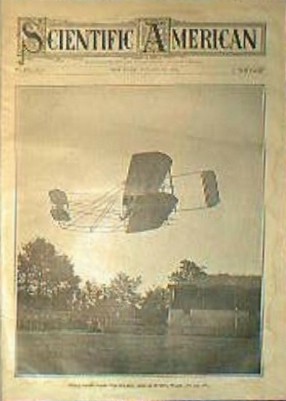
Science was becoming more complex and began to require more formal training. As a result, organizations began to form only accepting those with advance scientific education. During this period, science became more organized and standards began to be established. While science was becoming more professionalized out of necessity, Americans were still kept informed. Organizations, such as the Smithsonian and publications such as Scientific American, kept the public up to date on scientific knowledge and achievement. This was both a product and a contributing factor to the American public’s concern with modern science. (Science in America)

Jumping forward to the 20th century, science was now more theoretical and could no longer be utilized without a formal education. While scientific advances were still strongly related to public affairs — many scientific breakthroughs went into the vast urbanization of the 20th century — the government was now viewing science as a matter of national security. After Albert Einstein and other scientist lobbied the federal government to support the creation of a nuclear weapon in retaliation to German research, the Office of Scientific Research and Development was formed. Thus ,the importance of science grew beyond a social, practical, and even economic importance, it became deeply rooted in American government. (Manhattan Project)

Science continued to play a central role in American government, even becoming a symbol of national pride. Beginning 1957 when the Soviet Union launched the first satellite into space, Sputnik, the United States and the Soviet Union entered a competition in which the goal was space exploration, and the ultimate challenge was getting a man on the moon. At the time, the major purpose of the expedition was to achieve an impossible task in very little to demonstrate America’s strength as a nation. As John F. Kennedy said in his speech to Rice University, “We choose to go to the moon... because that goal will serve to organize and measure the best of our energies and skills.” Science, at this point, had become the measure of the success of a nation. It required educated citizens, money, and organization, and, as a result, was the perfect method for demonstrating international success without conquest.

About twenty years after the end of the Space Race, the united states entered another seemingly impossible task. The Human Genome Project began under the direction of the United State, but soon became an international effort. By leading the global effort to crack the human genome, America remained on the cutting edge of scientific discovery and technological achievement. (Human Genome Project)

Throughout its history, America has remained at the forefront of science and has even lead the movements that have changed the way science operates. By constantly being at the head of this race towards knowledge and its practical applications, America has risen from a powerless group of states to an international powerhouse. An unparalleled adherence to science has made America what it is today.

Works Cited

"American Philosophical Society." World History: The Modern Era. ABC-CLIO, 2010. Web. 31 Jan. 2010. ≤http://www.worldhistory.abc-clio.com≥.

Bonta, Steve. "Space Exploration Should Be Funded by the Private Sector." At Issue: Space Exploration. Ed. Daniel A. Leone. San Diego: Greenhaven Press, 2005. Opposing Viewpoints Resource Center. Gale. Deerfield High School. 7 Feb. 2010 ≤http://find.galegroup.com≥

Chang, Kenneth. "Billions for NASA, With a Push to Find New Ways Into Space.(National Desk)(NEWS ANALYSIS)(National Aeronautics and Space Administration)." The New York Times. (Feb 2, 2010): A16(L). Opposing Viewpoints Resource Center. Gale. Deerfield High School. 7 Feb. 2010 ≤http://find.galegroup.com≥

Eric Foner and John A. Garraty. "Manhattan Project." The Reader's Companion to American History Dec. 1 1991: n.p. SIRS Researcher. Web. 31 January 2010. ≤http://sks.sirs.com≥.

Heinlein, Robert. Short Science Fiction Tales. Ed. Isaac Asimov. New York: Collier Books, 1963. Print.

"Human Genome Project." American History. ABC-CLIO, 2010. Web. 31 Jan. 2010. ≤http://www.americanhistory.abc-clio.com≥.

“John F. Kennedy.” Wikipedia. Wikipedia, 1 Feb 2010. Web. 1 Feb 2010. ≤http://en.wikipedia.org/wiki/John_F._Kennedy≥.

"Manhattan Project." World History: The Modern Era. ABC-CLIO, 2010. Web. 31 Jan. 2010. ≤http://www.worldhistory.abc-clio.com ≥.

National Aeronautics and Space Administration. "Space Exploration Will Play an Important Role in America's Future." Opposing Viewpoints: America in the Twenty-First Century. Ed. Andrea C. Nakaya. Detroit: Greenhaven Press, 2006. Opposing Viewpoints Resource Center. Gale. Deerfield High School. 7 Feb. 2010 ≤http://find.galegroup.com≥

"Science in America." American History. ABC-CLIO, 2010. Web. 28 Jan. 2010. ≤http://www.americanhistory.abc-clio.com≥.